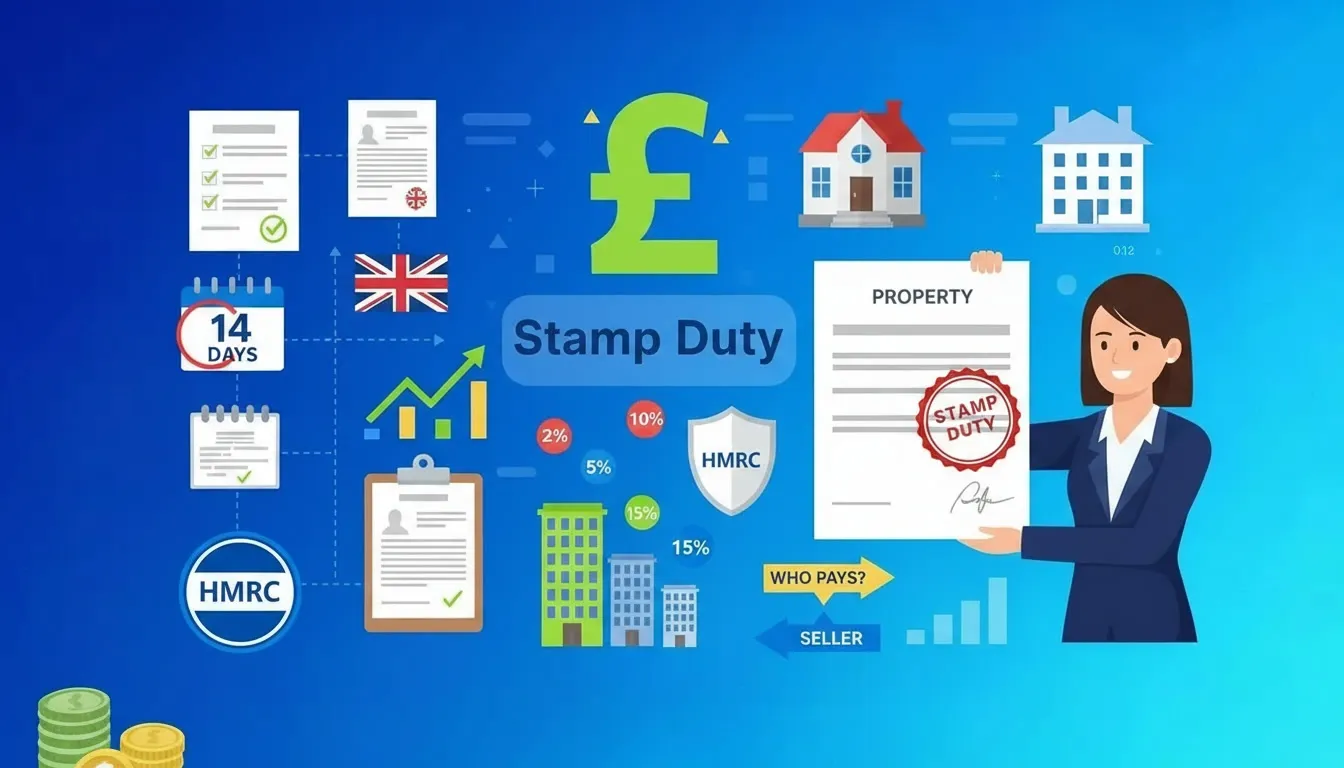
Many buyers still misunderstand how Stamp Duty works, often assuming it is the seller’s responsibility. In reality, stamp duty is a cost that falls squarely on the buyer and, if not planned for properly, it can significantly increase the overall cost of a property purchase.
Stamp Duty Land Tax (SDLT) in England and Northern Ireland involves several key decisions for buyers to understand. This guide covers the essential questions about stamp duty: When do you pay? How much will it cost? Who is responsible? And what happens when you sell?
Let’s explore everything you need to know about stamp duty in 2026.
What is Stamp Duty?
Stamp duty or stamp duty land tax (SDLT) is a tax paid to HMRC by the buyer of the property or land in England and Northern Ireland.
It is applicable both on freehold and leasehold property. The key things here are:
- It is paid by the buyer
- It has different rates in different regions of UK
- The payment depends on the price of the property.
It’s not optional and must be dealt shortly after the property purchase has been done.
When do you pay stamp duty in the UK?
The buyer has to pay the tax as soon as the ownership of the property is legally shifted to him. From that day, the buyer has a 14 days time period to submit the Stamp Duty Land Tax to HMRC and pay any tax due.
In most cases, the solicitor or conveyancer arranges the amount on the buyer’s behalf and pays it but the legal responsibility still sits with the buyer.
If the submission or payment gets late then HMRC can issue penalties and interest.
In Scotland and Wales, it needs to be paid within 30 days.
Who pays stamp duty?
Stamp duty is always paid by the buyer and this rule is for all
- Buying your first home
- Moving house
- Purchasing second property
- Investing in a buy to let.
In England & Northern Ireland, you don’t need to pay stamp duty on the first £125,000 of the property’s value. For first time buyers, you don’t pay tax on the first £300,000.
From 1st April 2025, for all buyers the threshold has been reduced to £250,000 to £125,000 and for first home buyers from £425,000 to £300,000. . That’s why buyers have to pay more stamp duty than usual.
how long do you have to pay stamp duty?
You have 14 days from the date of completion to pay stamp duty in the UK (in England and Northern Ireland). The deadline applies to both filing your SDLT (Stamp Duty Land Tax) return AND making your payment
Do you pay stamp duty when you sell a house?
No. You do not pay stamp duty when you sell a property.
This is a common misconception. You have to pay capital gain tax while selling a property but the stamp duty is always paid by the buyer.
How much is stamp duty?
There are different rates for different portions of property price in England and Northern Ireland.
Standard stamp duty rates (England & Northern Ireland)
| Portion of Property Price | Stamp Duty Rate |
|---|---|
| Up to £125,000 | 0% |
| £125,001 – £250,000 | 2% |
| £250,001 – £925,000 | 5% |
| £925,001 – £1.5 million | 10% |
| Over £1.5 million | 12% |
This structure means that even for higher-value properties, only the portion within each band is taxed at that rate. Seeking expert advice can help you avoid overpaying taxes
Stamp duty for first-time buyers
First-time buyers benefit from one of the most generous reliefs in the stamp duty system. If you qualify as a first-time buyer, you pay:
- 0% stamp duty on the first £300,000
- 5% on the portion between £300,001 and £500,000
If the total purchase price does not exceed £500,000 then you are eligible for the relief. If it does, first-time buyer relief is lost entirely, and standard rates apply to the full purchase.
You need to know that in Wales there is no first time buyer relief while in Scotland the first time buyer relief applies when property value is less or equal to £175,000.
Stamp duty on second homes and buy-to-let properties
Higher charges are applied if you are buying an additional property, such as a second home or a buy-to-let investment.
In England and Northern Ireland, this means a 5% surcharge added to the standard rates.
This surcharge has become a problem for UK property investors and you can still reclaim it under certain conditions.
Stamp Duty in Scotland (Land and Buildings Transaction Tax – LBTT)
If you’re buying property in Scotland, you don’t pay stamp duty as such. Instead, you pay Land and Buildings Transaction Tax (LBTT). It works in a similar way to SDLT, but the thresholds and rates are different, and they tend to kick in earlier.
Residential LBTT rates (Scotland)
| Portion of Property Price | LBTT Rate |
| Up to £145,000 | 0% |
| £145,001 – £250,000 | 2% |
| £250,001 – £325,000 | 5% |
| £325,001 – £750,000 | 10% |
| Over £750,000 | 12% |
Just like in England, the tax is charged in bands. You don’t pay one flat rate on the full price. Only the portion that falls into each band is taxed at that rate.
If you’re buying an additional residential property in Scotland, an extra Additional Dwelling Supplement (ADS) applies. From 4 December 2024, the percentage has increased from 6% to 8%
This is charged on top of the standard LBTT and significantly increases the overall tax bill, so it’s something investors and second-home buyers need to factor in early.
Stamp Duty in Wales (Land Transaction Tax – LTT)
In Wales, stamp duty is replaced by Land Transaction Tax (LTT). Again, the structure is similar, but the thresholds and rates are different from both England and Scotland.
Residential LTT rates (Wales)
| Portion of Property Price | LTT Rate |
| Up to £225,000 | 0% |
| £225,001 – £400,000 | 6% |
| £400,001 – £750,000 | 7.5% |
| £750,001 – £1.5 million | 10% |
| Over £1.5 million | 12% |
One thing buyers often notice straight away is that Wales has a higher nil-rate threshold than England. That helps lower-value purchases, but rates rise more sharply once you move into higher bands.
As with the rest of the UK, higher rates apply to additional residential properties, meaning buy-to-let and second homes attract extra tax from day one.
How Stamp Duty is calculated?
Stamp duty is calculated just like income tax. Here is the calculations for £500,000 worth house:
- 0% on the first £125,000 = £0
- 2% on the next £125,000 = £2,500
- 5% on the next £250,000 = £12,500
- Total stamp duty payable = £15,000
Properties that may be exempt or qualify for relief
Not every transaction triggers stamp duty. Some purchases fall below the minimum threshold, while others qualify for relief or exemption. Examples include:
- Properties having cost less than £40,000
- Certain transfers involving divorce or separation
- Charitable purchases
- House registered on company names rather than individuals and worth more than £500,000 are taxed at 15%
Additionally, stamp duty applies to property value only, not removable fixtures and fittings, which can sometimes reduce the taxable amount if correctly documented.
FAQs
Do I pay stamp duty on my main residence if I own another property?
Yes. You have to pay additional rates when you buy another property unless you sell the main residence within 36 months.
When exactly do I have to pay stamp duty?
Stamp duty is due after completion and you have to submit your tax return within 14 days to HMRC.
Can I delay paying stamp duty?
A delay in paying stamp duty can lead to penalties and interest..
Is there a different deadline for Scotland and Wales?
Yes. Scotland and Wales have their own systems (LBTT and LTT).
Can I get a refund of stamp duty after paying?
In some cases, yes. If you paid higher rates because you owned two homes and later sold your previous main residence within the allowed timeframe, you may be able to claim a refund.
Do I have to pay Stamp duty on lease homes?
Yes, in most cases you have to pay stamp duty on lease homes at standard rates but for unassigned lease properties you have to pay additional charges.
Do I have to pay Stamp duty on fittings and fixtures?
Here is an opportunity for you to save on stamp duty. You don’t have to pay stamp duty on movable items like curtains, carpets etc so you can decide a suitable price for the items and subtract the amount from total price of the property and calculate stamp duty.
But here is an important thing to keep in mind, stamp duty is applicable on in-built fixtures and fittings like bathroom, kitchen and wardrobes.