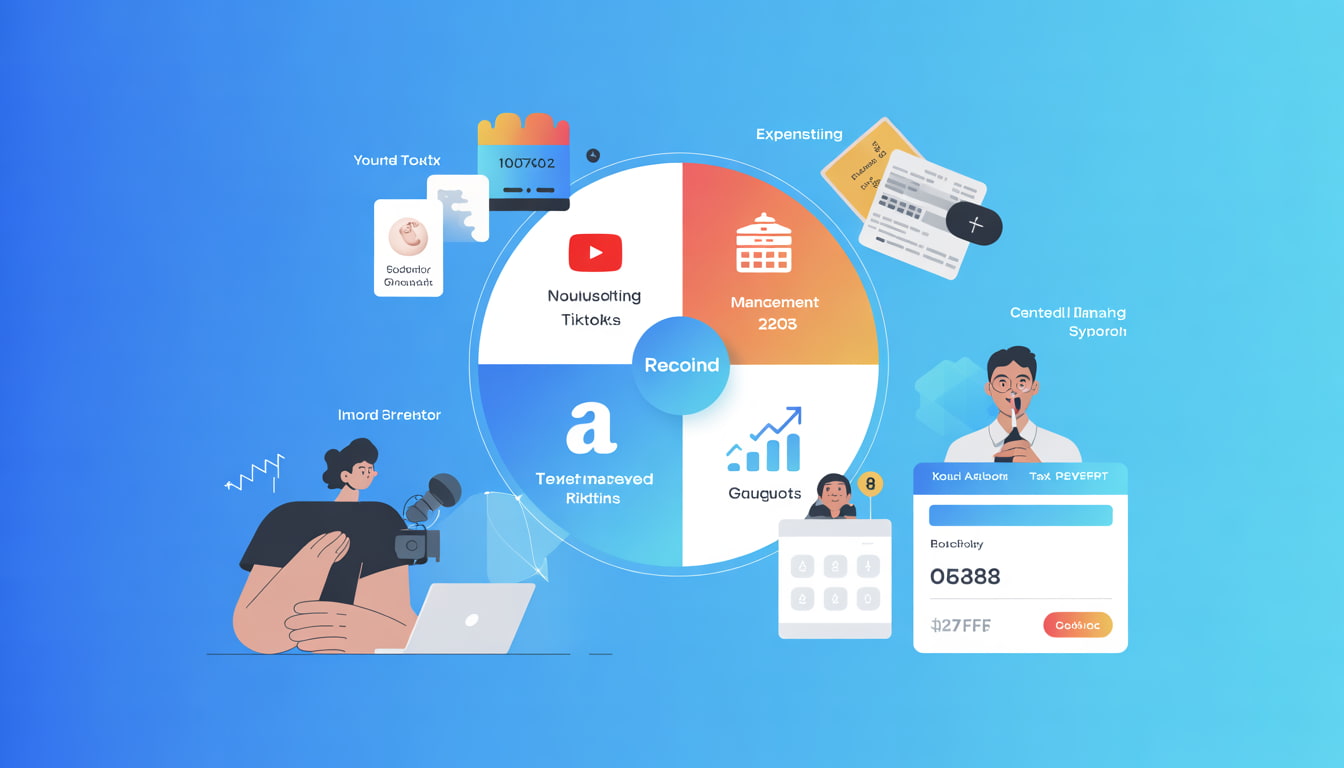
Welcome to the era of content creation where monetizing your passion can be more challenging than just creating interesting videos or posts. Diving into the influencer business and managing content creator finances can be thrilling and profitable in our digital world. Influencers are all the rage with social media offering countless chances to create content and connect with followers.
Content creation offers countless opportunities to build a sustainable income stream. However, turning your online persona into a real, compliant business requires smart budgeting, proper record-keeping, and a keen understanding of UK tax obligations. This comprehensive guide provides essential steps for financial management tailored specifically to UK content creators and influencers, ensuring your success while remaining fully compliant with HMRC regulations.
Why Content Creators Need an Accountant
Your income as a content creator is rarely straightforward or predictable. One month you might earn £500 from ad revenue and a brand deal; the next month could bring £3,000 from a major sponsorship followed by a quiet month at £200. This inconsistency means that managing finances as a content creator is far more complex than simply uploading content and attracting followers
You’ve got to maneuver through the legal and financial stuff to build a rock-solid foundation for your brand. From getting your business officially recognized to handling your finances. Every move is essential to stay on track and escape setbacks. Let’s jump into the details.
Step #1: Keep Business and Personal Finances Separated
This is rule number one when managing money as a content creator: do not mix personal and business funds. Using a separate bank account makes it easier to track income and expenses from your content-creation business.
A separate business bank account is not a legal requirement for a sole trader, although the terms of a personal account may restrict business use. A limited company is legally separate from its owner, so company transactions and money should be kept separate from the director’s personal finances
STEP 2: MONITOR YOUR REVENUE STREAMS
Most content creators have multiple sources of revenue and income which can fluctuate from month to month. Track every stream separately for a complete picture of income. This could be ad revenue from YouTube, brand sponsorships, affiliate links, and product sales.
An accountant will help you to create a system for revenue streams that shows where your money is coming from and how it can grow in the future.
Step 3: Keep Track of Expenses
Keep accurate records of all business expenditure so you can calculate your taxable profit correctly and claim allowable expenses. Depending on the circumstances, these may include equipment, software subscriptions, website costs, business-use phone and internet costs, and travel undertaken wholly for business purposes. Personal costs and the private-use proportion of mixed expenses are not allowable.
An accountant can help content creators categorise expenses correctly and claim the deductions to which they are entitled. You cannot deduct actual business expenses and also claim the £1,000 trading allowance against the same income, so the most beneficial method should be considered each tax year.
Step 4: Strategy to manage tax efficiently.
The biggest challenge for a creator when it comes to paying taxes. Depending on your income, you may need to pay estimated taxes each quarter as a self-employed individual throughout the year or file annual returns.
Self-employed income or money from sponsorships and ad revenue can also carry their tax responsibilities.
If you hire an accountant for content creators, they can help guide you through navigating your tax requirements. They make sure you comply with all relevant laws. They may be able to tell you some tax credits or deductions that might help reduce your overall taxes. Your accountant will also advise you whilst preparing a fraction of your earnings to pay taxes along with preventing the last-ditch endeavor.
Step 5: Planning for the Future
It is easy to be lost in what we are doing now. However, planning for the future dramatically determines our success as a content creator. By creating a financial roadmap with the help of an accountant you can write your goals and how to achieve them. For example, you could fund other investments or look for alternative sources of income to invest your money in different channels and save from a large business cost.
By maintaining your money you can be better equipped, optimize, and expand your copywriting organization. They can also advise you on how to grow organically, without committing to overextend yourself financially.
Step 6: Use Accounting Software
Your finances do not require manual management. Some accounting software will keep track of your invoices for you and may even generate full financial reports. Accountants for content creators will advise you to use the right software depending on your business and make sure you set up everything correctly.
Accounting software would save you time and likely reduce errors. Your accountant can then check your data to ensure it is correct and current. They allow you a complete snapshot of the financial state for better decision-making.
Step 7: Ensure Compliance with Financial Regulations
As a content creator, you must comply with the financial and tax rules relevant to your business. The requirements can become more complex as revenue grows, you work with overseas brands, hire staff, incorporate a company or approach the VAT threshold.
A UK-established business must generally register for VAT if its taxable turnover exceeds £90,000 over the previous rolling 12 months or if it expects taxable turnover to exceed £90,000 in the next 30 days. The test is based on taxable turnover, not profit, and creators should monitor it regularly rather than only at the end of the tax year.
Conclusion: Invest in an Accountant for Long-Term Success
Finances are a critical component of being an efficient business owner. However, running something else points out one of the biggest holes in content-creation businesses. When you hire an accountant who knows the ins and outs of life as a content creator. It becomes that much easier to get your financial situation in order. Our accountant provide invaluable support when it comes to separating your personal and business finances, tracking different income streams, managing taxes, and planning for growth.
Having more control over your funds acts to reduce stress. But it also puts things in the right place for your long-term success. Therefore, if you take developing your career as a content creator seriously then enlist an accountant to guide every financial move.
Reflex Accounting provides customized financial services specifically designed for social media Influencers and digital content producers. We begin with an initial consultation to grasp your specific needs, enabling us to craft a bespoke accounting solution that aligns perfectly with your requirements. We invite you to reach out to us for additional details about our dedicated accounting services for content creators.
FAQs:
Q: I earned £900 from YouTube AdSense last year. Do I need to tell HMRC?
Usually not, provided your total gross trading income from all relevant self-employment and side-hustle activities combined was £1,000 or less during the tax year and none of the exceptions to the trading allowance applies. You may still need to file a return for another reason, or may choose to file—for example, to claim a trading loss. If your gross trading income exceeds £1,000, you will normally need to register for Self Assessment by 5 October following the end of that tax year, rather than “immediately”
Q: Some creators say you can ignore HMRC until you earn £3,000. Is this correct?
No. As at 25 September 2026, the current gross trading-income threshold for normally reporting through Self Assessment remains £1,000. The government has announced plans to increase the Self Assessment reporting threshold to £3,000 gross within this Parliament, but the change has not yet taken effect and it will not increase the £1,000 tax-free trading allowance. Until the new system is implemented, creators whose relevant gross trading income exceeds £1,000 should continue to follow the existing rules.
Q: A brand sent me a free phone case worth £100 in exchange for a review post. Do I have to declare that as income?
Yes, absolutely. PR gifts provided in exchange for content are taxable income at their fair market value. See our detailed guide on Do i need to pay tax on PR Gifts here: https://reflexaccounting.co.uk/do-influencers-need-to-pay-tax-on-pr-gifts/
Q: When do content creators need to register for VAT?
A UK-established creator business must normally register for VAT when taxable turnover exceeds £90,000 over any rolling 12-month period, or when it expects taxable turnover to exceed £90,000 in the next 30 days.