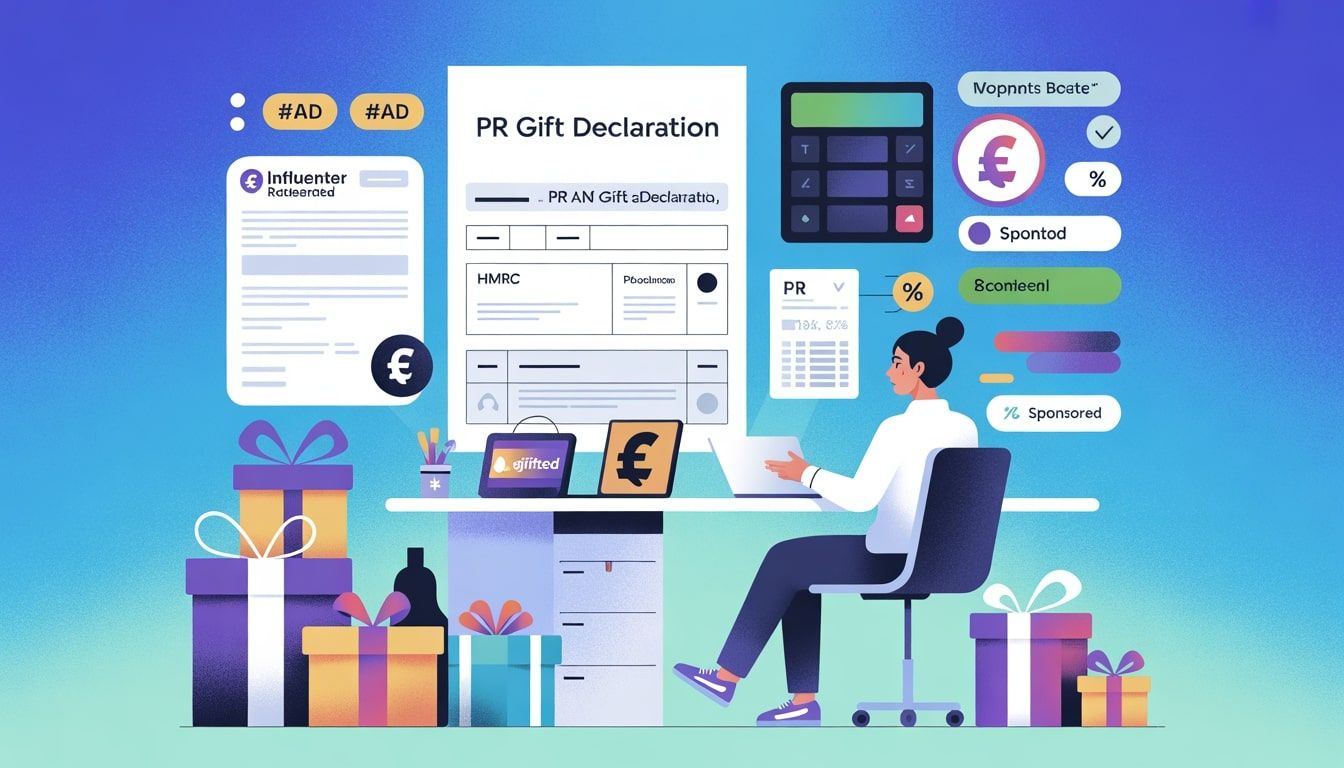
The UK influencer marketing is booming, and their DMs are full of brands offering free stuff. According to IMARC Group, the UK influencer marketing market reached approximately USD 3.1 billion in 2024 and is projected to grow at a 28% CAGR to USD 28.3 billion by 2034. Many creators are receiving exciting PR packages. Those luxury beauty hauls or fashion drops can feel like perks, but HMRC does not see Public Relations gifts as “free”, and many come with tax implications.
Whether you are a full-time creator or running influencer work as a side hustle, understanding taxes on PR gifts in the UK is essential. Drawing from HMRC’s 2025 guidelines and expert insights, this guide will help you to stay compliant while enjoying those influencer gifts.
Why HMRC Cares About Influencer Gifts
As the UK influencer economy is now worth billions, HMRC recognises that a growing share of influencer earnings is non-cash. That’s why influencer gifts fall under a tax concept called “payments in kind”. Simply, if you receive something valuable due to your work, HMRC usually treats it as income even if no money reaches your bank account.
HMRC actively monitors online earnings using data sharing, platform reporting and brand audits. So, ignoring PR gifts is no longer a safe option.
What Exactly Counts as an Influencer Gift?
From a tax perspective, influencer gifts can include:
- Products sent for review or promotion
- Free services like hair, beauty, coaching and memberships
- “Barter deals” where content replaces cash
- Event tickets, trips or hotel stays
Are PR Gifts Taxable in the UK?
Mostly, Yes. PR gifts are taxable when they meet the following three HMRC tests:
- Connection to trade: You received it because you are an influencer
- Expectation of promotion: Explicit or implied
- Market value: It clearly has a retail price
Example 1: Taxable Gift
If a beauty influencer receives a £500 skincare set from a brand that expects an Instagram review and affiliate links, this counts as taxable income at its fair market value, which is added to total earnings.
Example 2: Non-Taxable Gift
If a brand sends uninvited samples under £50 with no promotion expectation and that influencer doesn’t post about them, then this is usually tax-free and treated like a genuine personal gift.
Do Influencers Need to Pay Tax on PR Gifts?
Yes, influencers need to pay tax on PR gifts when their total income exceeds HMRC thresholds. Whether a PR gift is taxable depends on its value, the intent behind it, and whether it’s transferable. HMRC considers all income sources, including cash payments, affiliate commissions, and advertising revenue, when determining your total taxable income.
Gifts over £50 with promotional strings or convertible to cash are taxable at yourincome tax rate in the category of 20%, 40% or 45%. If total income exceeds £1000 in a tax year, you need to register for Self Assessment, declare all taxable income and pay Income tax and National Insurance on profits, not turnover.
Example: Fashion Influencer
A YouTuber earns £20,000+ income in luxury clothing, handbags and accessories for posts. HMRC reviews this as barter income, and it is taxable at market value. Expenses can be deducted, like filming costs.
Example: Experience Gift
A hotel sends a £1,200 weekend stay for vlog coverage. It is taxable as income, and travel deductions can be claimed. Non-transferable items might escape tax if no cash value is involved.
Do Influencers Have to Declare All PR Gifts to HMRC?
No, influencers have to declare all PR gifts that are taxable only. If their total trading income, including Payments in Kind, exceeds £1,000, they need to declare a Self Assessment tax return that is due on 31 January. HMRC tracks records via public posts and brand data.
What if Influencers Can’t Sell the Gift?
Even if influencers can’t resell it, it’s either an experience or it’s non-transferable, HMRC can still treat it as taxable. For example, a hotel stay worth £1,000 is gifted in exchange for social media coverage. HMRC still treats the £1,000 value as income.
What Happens If Influencers Don’t Declare PR Gifts?
If an influencer fails to declare PR gifts, it is undeclared income. They need to pay £100 late filing penalties, interest on unpaid tax and additional penalties for careless or deliberate errors.
How HMRC Spots Undeclared Gifts & Tips to Stay Compliant
HMRC uses AI, bank data and social audits. Any lavish unboxings without matching income can raise risks. In that case, penalties can be applied from 0-30% for mistakes to 100% for deliberate mistakes. Here’s what an influencer needs to do:
- Keep simple records
- Track brand name, date received, item or experience, retail value and whether the promotion was required
- Disclose clearly: use #ad or #gifted for transparency and audit proof
- Claim all expenses
- Over £50,000 profits: consider a limited company for efficiency
Conclusion: Turn Influencer Gifts into Tax-Smart Wins
Influencer gifts are efficient for boosting brands, but mishandling taxes on PR gifts in the UK risks trouble. If influencing is part of your income, treating PR gifts properly is essential.
How Reflex Accounting Helps You?
At Reflex Accounting, we specialise in helping UK influencers with Self Assessment, Payments in Kind valuations and compliance. Need personalised advice? Book a free consultation. We will review your PR gifts and maximise deductions.
Faqs:
Q: How Does HMRC Expect Influencers to Value a Gift
It is a technical point. HMRC requires fair market value, which means the price a normal customer would pay, not the brand’s cost price.
Q: Do PR gifts count as income?
Yes, often they do. If you receive a PR gift because of your work as an influencer and there is an expectation of promotion, then HMRC usually treats it as taxable income, even if no cash is paid.
Q: Do I Have to Declare All PR Gifts, Even Small Ones?
No, not all of them. Low-value items with no expectation to post are usually not taxable. But PR gifts linked to content or collaborations should be declared.
Q: What’s the Difference Between a PR Gift and a Business Expense?
A PR Gift is something you receive and promote. It is usually taxable. While Business expense is something you pay for to run your business. It usually reduces taxes.