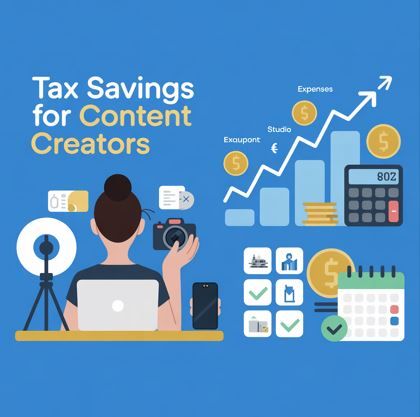
Running a content creation business in the UK opens up certain opportunities unique to the industry that you may claim as tax deductions, helping to reduce your corporation tax bill and free up money that could be used to grow your brand. From filming equipment to travel expenses, this complete guide about tax savings for content creators help you work out what you can claim and maximize your tax savings.
Do Content Creators Pay Tax in the UK?
Yes. If you earn money through YouTube, Instagram, TikTok, blogging, or any online platform, HMRC considers it taxable income. You can earn up to £1,000 per year from content creation without registering as self-employed or paying tax. Once you exceed this threshold, you must:
- Register with HMRC as self-employed
- File annual Self-Assessment tax returns (deadline: 31 January)
- Pay Income Tax and National Insurance Contributions
What Expenses Can Content Creators Deduct on Their Taxes?
In the digital age, creating content has become a sustainable and profitable career path for most people. Whether you’re a blogger, vlogger, podcaster, or digital artist, there are various tax deductions available that can significantly reduce your tax bill.
Navigating these tax deductions can be a lot, so we put this guide together highlighting the top tax deductions that content creators take. Moreover, HMRC only allows expenses that are incurred “wholly and exclusively” for business purposes. If something has ANY personal use element, you can only claim the business portion or it may be disallowed entirely.
Editing and Post-Production
As a content creator, you probably depend on a range of tools and software to produce and share your content. Consider items such as cameras, microphones, computers, and editing software. Subscriptions to services like Adobe Creative Cloud, Canva, or Everlance can be claimed as deductions.
These expenses are essential for your business operations. If you also use the software for personal purposes, you can only deduct the portion that is used for business.
Photoshoots & Production Costs
Engaging a photographer or videographer for your content is a valid business cost. If you’re producing top-notch visuals for your brand or social media, you can deduct these expenses.
- Props and Set Design: From backdrops to costumes, anything you buy for shoots constitutes a business expense. Keep those receipts coming?
- Studio Rentals: Need a professional setup? Studio hire costs for shoots are deductible.
Branded Garments and Merchandise
- Clothing for Shoots: Only costumes, branded uniforms, or clothing with no everyday use qualify. Regular clothing worn in videos is not deductible, even if purchased specifically for content.
- Promotional Products: Expenses of custom items, such as branded mugs or T-shirts, used for marketing or resale purposes are considered eligible expenses.
Access to Location
- Gym Memberships for Fitness Content: Gym memberships are often challenged by HMRC due to personal use. If claiming, keep detailed records showing exclusive business use. Many fitness creators find it safer to claim per-session studio hire instead.
- Event Tickets and Venue Access: Attend or host events for your brand. Expenses like buying tickets or renting a venue are deductible, provided they are purely for business purposes.
Freelancers or Independent Contractors
- Creative Freelancers: Costs for graphic designers, editors, or social media managers who assist with your content are legitimate tax deductions.
- Consultants and Advisors: The fees of business consultants, accountants, or legal advisors are fully deductible.
Travel, Accommodation, and Subsistence
- Business Travel: Transportation expenses to shoots, collaborations, or events by car, train, or plane are deductible.
- Overnight Stays: Accommodation and meals on business-related trips are deductible; however, the trip’s primary purpose should be work.
- Client Meetings: Discussing business over meals with collaborators? Those expenses may qualify, but strictly social events likely won’t.
Tools and Technology
- Camera Equipment: Cameras, microphones, tripods, and other tools used for creating content are tax-deductible.
- Software and Applications: Subscriptions to analytics tools, scheduling apps, or editing software are valid claims.
Business Services and Administration
- Accountants and Bookkeepers: Professional financial help can save you time and money, and their fees are deductible.
- Legal Assistance: Legal advice on contracts or intellectual property matters also qualifies as a business expense.
Internet and telephone expenses
Internet expenses are essential for content creators. A part of these costs can be claimed as a business expense and maximize your tax savings. Similar to equipment and software, if you also utilize these services for personal purposes, you can only deduct the portion used for your business activities. Maintaining thorough records of your usage can assist in supporting these deductions if you face an audit.
How to Steer Clear of Common Tax Issues
- Mixed-Use Expenses: For items used both personally and professionally, such as home offices or vehicles, claim only the business portion.
- Record-Keeping: Keep detailed records and receipts for all of your expenses. This will not only ensure compliance but also help in identifying missed deductions.
- Free Products and Income Reporting: If brands send you products in consideration of content, items are only deductible if used for business purposes. However, personal use may need to be accounted for in income.
Simplify Tax Deductions with Professional Assistance
Tax deductions needn’t be daunting. A tax advisor who understands the world of content creation can help you maximize your tax savings and stay compliant with HMRC. Create great content and leave the headache of taxes to the pros. For expert guidance to manage your earnings and ensure tax compliance, Reflex Accounting offers specialized services tailored to influencers and content creators. Contact us today to arrange a consultation and take the next step towards financial success.
FAQs:
Q: Do I need to register for VAT as a content creator?
You must register for VAT if your taxable turnover exceeds £90,000 in any rolling 12-month period. Once registered, you charge VAT on your services (brand deals, consultations, etc.) and can reclaim VAT on business expenses. Some creators voluntarily register earlier to reclaim VAT on equipment purchases
Q: Do I need to register as self-employed if I’m a content creator?
Yes, if your content creation income exceeds £1,000 in a tax year (the Trading Allowance), you must register with HMRC as self-employed. Register as soon as you exceed this threshold or by 5 October after the tax year in which you started earning. Late registration can result in penalties.
Q: Can I claim everyday clothing as a business expense?
No. HMRC does not allow clothing that could be worn for everyday purposes, even if purchased specifically for content. Only costumes, branded uniforms with no everyday use, or specialist outfits qualify.